





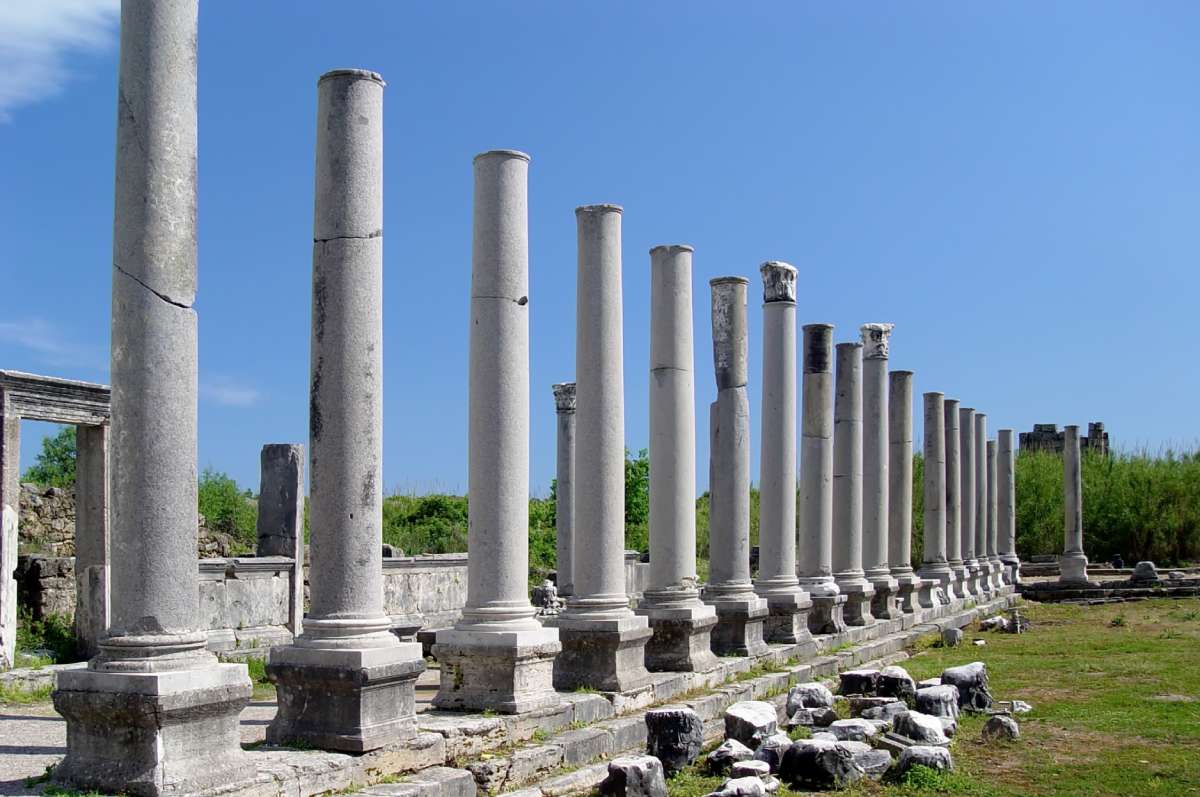
Perge ancient city is widely regarded as a pinnacle of Roman urban planning in Turkey’s Mediterranean belt. Situated a short distance from Antalya’s urban core, the site functions as an open-air archive that documents the architectural shifts of the Roman Empire. For those interested in archaeology or classical photography, visiting the ancient city of Perge Antalya provides a raw, tangible connection to the past that few other ruins in the region can match. It is not just a tourist stop; it is a profound look into the social and political life of the Pamphylia era.
History of Perge Ancient City
The roots of the ancient city of Perge stretch back to the Bronze Age, but its true golden age occurred during the Roman period in the 2nd and 3rd centuries AD. Legend has it that the city was founded by Greek seers after the Trojan War. However, it was under Roman rule that Perge transformed into a marble-clad masterpiece. It was a vital center for Christianity as well; St. Paul visited the city twice during his missionary journeys. When you explore the ancient city Perge, you can still feel the echoes of the philosophers, traders, and gladiators who once called this place home.
Where Is Perge Ancient City Located?
The Perge Ancient City in Antalya is located in the Aksu district, approximately 18 kilometers east of Antalya’s city center.
Location of Perge Ancient City
The site is strategically positioned between the Düden and Aksu (ancient Kestros) rivers. Its inland location protected it from pirate raids, while the nearby river allowed it to remain a significant trading hub. Today, its proximity to Antalya Airport makes it one of the most accessible archaeological sites in the region.
How to Get to Perge Ancient City?
You can reach the ancient city of Perge via the Antray (T1B) tram line, by taking a public bus toward Aksu, or by private car via the D400 highway.
Private Car, Public Transportation, and Tour Options
There are several convenient ways to reach the site, whether you prefer the flexibility of a personal vehicle or the ease of local transit systems.
- Public Transportation: Take the T1B tram line from Antalya city center and get off at the "Aksu" stop. From there, it is a pleasant 2-kilometer walk or a short taxi ride to the entrance.
- Private Car: Follow the D400 highway toward Alanya; the turn-off for Perge is well-signposted near the Aksu intersection.
- Tour Options: Many agencies offer combined tours of Antalya to the Perge ancient city, often including Aspendos and Side in a single-day itinerary.
Visiting Information for Perge Ancient City
The site is open daily. The entrance fee to the ancient city of Perge is currently required for entry, but owners of a Turkish Museum Pass can enter for free.
Visiting Hours, Entrance Fee, Museum Pass, and Recommendations
To make the most of your trip, it is essential to plan your arrival around the site's seasonal schedule and prepare for the site's physical conditions.
- Hours: Summer (April – October) 08:00 to 20:00; Winter (November – March) 08:00 to 17:30.
- Fees: Check the official Turkish Museums website for the most updated Perge ancient city entrance fee, as prices are subject to seasonal updates.
- Pro-Tip: Wear comfortable walking shoes. The marble streets can be uneven and slippery. Also, bring a hat and water, as there is very little shade within the ruins.
Must-See Highlights of Perge Ancient City
Don't miss the 12,000-seat Stadium, the Hellenistic Gate, and the 300-meter-long Colonnaded Street with its central water channel.
Perge Theatre: Stage and Seating Reflecting Roman Architecture
The Perge Theatre is a stunning example of Greco-Roman fusion. Capable of holding nearly 15,000 spectators, the stage building (skene) was once decorated with intricate marble reliefs depicting the life of Dionysus.
Perge Roman Gate: The Monumental Entrance to the Ancient City
While the circular Hellenistic towers are the symbols of the city, the Roman Gate served as the grand ceremonial entrance. It reflects the architectural transition and the defensive needs of the late Roman period.
Perge Stadium: Sports and Performance Venue of the Ancient Era
This is one of the best-preserved ancient stadiums in the world. With a capacity of 12,000 people, it hosted gladiator fights and athletic competitions. You can still see the inscriptions of shopkeepers under the vaulted seating areas.
Perge Agora: The Heart of Trade and Urban Life
The Agora was the social and commercial pulse of the Perge ancient city. Walking through this square, you can imagine the bustling markets where spices, textiles, and local goods were traded centuries ago.
Colonnaded Street: The Main Axis of the City and Photo Spots
This is the city's "main street." It features rows of majestic columns and a unique water canal running down the center, which helped cool the city during hot Mediterranean summers. It is the perfect spot for photography.
Perge Baths: Traces of Social Life in the Roman Period
Roman baths were more than just places to wash; they were social clubs. The scale of the Frigidarium (cold), Tepidarium (warm), and Caldarium (hot) rooms in Perge showcases the city's incredible wealth.
Kestros Fountain (Nymphaeum): Where Perge Meets the Power of Water
Located at the northern end of the Colonnaded Street, this monumental fountain was dedicated to the river god Kestros. Water would cascade from the fountain down into the street’s canal, creating a refreshing atmosphere for the citizens.
Suggested Itinerary for Visiting Perge Ancient City
Following a specific route ensures you cover the vast 100-hectare site efficiently.
- 08:30 Arrival: Start early to avoid peak temperatures and the large groups traveling from Antalya to the Perge ancient city.
- Stadium and Theatre: View these external structures first before entering the main city walls.
- Hellenistic and Roman Gates: Enter the city through the monumental gateways.
- The Main Axis: Walk the Colonnaded Street toward the Nymphaeum.
- The Roman Baths: Explore the social quarters and the Agora.
- Aksu Stop: Conclude the visit by sampling local "Aksu Köfte" in the town center.
Make your stay exclusive with Pine Beach Belek on your Antalya itinerary.
After a day of trekking through history at the Perge ancient city, you deserve a retreat that matches the grandeur of the Roman era. Located just a short drive from the ruins, Pine Beach Belek offers the perfect blend of luxury, comfort, and natural beauty. Whether you want to relax by the Mediterranean Sea or indulge in world-class spa treatments, making Pine Beach Belek your home base ensures that your Antalya journey is truly unforgettable. As one of the finest Antalya Belek hotels, Pine Beach Belek promises an unparalleled experience for every guest.
Ready to step back in time? Book your stay at Pine Beach Belek today and start planning your legendary journey through the ancient city of Perge!